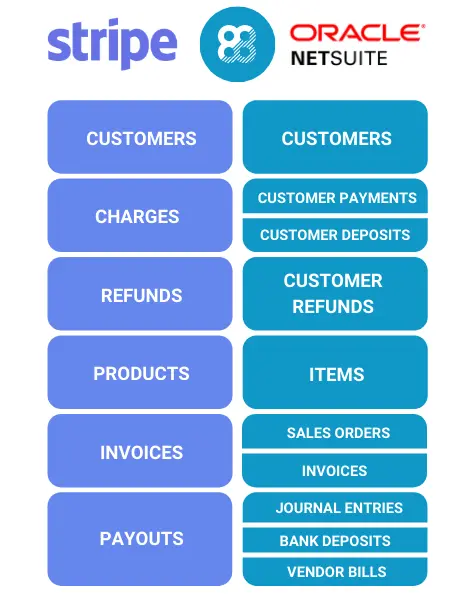
Seamlessly connect Stripe x NetSuite with Big Bang
Big Bang’s experts deploy Stripe x NetSuite connector, in real-time, for reliable payment processing integrated with the #1 cloud ERP

In the modern world of all things cloud, one of the greatest benefits of integrating systems is to make online transactions seamless. Big Bang’s Stripe x NetSuite Connector is the first affordable Stripe to NetSuite Integration - with no middleware.
- Multi-Stripe environments with multi-currency and subsidiary management make it a powerful tool to control your accounting processes
- No more painful CSV import to get financial data from Stripe to NetSuite
- Built and supported by NetSuite’s leading global partner, Big Bang
- Affordable with no hidden costs. Annual plans cost 10x less than the competing products
- Better customer experience when customers pay their NetSuite invoices directly with Stripe
- Custom connectors can be costly to maintainNearly 2,000 customers worldwide rely on Celigo's integrator.io to synchronize data, automate processes, and streamline operations by integrating popular cloud applications, such as NetSuite, Salesforce, Shopify, Amazon, banks, and many others.
- All in-one connectivityDesigned for IT and business users, as a complete iPaaS, it offers an adaptive solution that can be tailored for your industry, enterprise, department, and ecosystem.
 Knowledge Management,
Documents,
Help Desk,
Wiki and Intranet,
Chat, Website,
Social Media and Sharing PROMOTIONS RELATIONS PRODUCTION FINANCE MASCRMHCMPSAMRPSCMERP